Research Article | | Peer-Reviewed

Antifungal Activity of Five Aqueous Extracts on Rhizopus sp., the Agent Responsible for Soft Rot of Cassava (Manihot esculenta Crantz) Tubers in Côte d'Ivoire

Received: 24 November 2025     Accepted: 11 December 2025     Published: 31 December 2025
Views:       Downloads:
Abstract

Cassava (Manihot esculenta Crantz) is the second most important food crop in Côte d'Ivoire after yams. However, its production is threatened by the fungus Rhizopus sp., which causes cassava tuber rot. The chemical pesticides used to control these microorganisms pose a threat to the environment, as well as to the health of those who use and consume them. To minimize the damage caused by these substances, a study was conducted to evaluate the biological efficacy of aqueous extracts of Syzygium aromaticum, Allium sativum, Artemisia annua, Zingiber officinale and Tithonia diversifolia against Rhizopus sp. The extracts were tested at concentrations of 30, 60 and 90 g/L for their effect on mycelial growth and spore germination. The direct contact method in PDA medium was employed, and the results revealed that all the aqueous extracts exhibited an antifungal effect on mycelial growth and spore germination. The highest inhibition rates of mycelial growth and spore germination were obtained at 90 g/L. Aqueous extracts of Syzygium aromaticum were the most effective, achieving a 100% inhibition rate, while those of Tithonia diversifolia had the lowest inhibition rates.

Published in American Journal of Life Sciences (Volume 13, Issue 6)
DOI 10.11648/j.ajls.20251306.17
Page(s) 229-241
Creative Commons

This is an Open Access article, distributed under the terms of the Creative Commons Attribution 4.0 International License (http://creativecommons.org/licenses/by/4.0/), which permits unrestricted use, distribution and reproduction in any medium or format, provided the original work is properly cited.

Copyright

Copyright © The Author(s), 2025. Published by Science Publishing Group

Keywords

Antifungal Activity, Inhibition, Aqueous Extracts, Cassava, Rhizopus sp

1. Introduction
Cassava (Manihot esculenta Crantz) is an annual dicotyledonous plant belonging to the Euphorbiaceae family, with tuberous roots that are rich in starch . In terms of plant-based food production, it ranks fourth in the world, behind maize, rice and wheat . It is also the second largest source of caloric energy in developing countries .
Global cassava production was estimated at over 330 million tonnes in 2022 , with West Africa producing around 122 million tonnes a 3.4% increase compared to 2021 . In Côte d'Ivoire, production is estimated to have exceeded 6.3 million tonnes in 2022. Cassava ranks second among food crops produced and consumed, after yams . Production is widespread throughout the country, with significant activity in the south-east, west, and centre regions . Côte d'Ivoire's annual cassava production has increased from 5.5 million tonnes in 2019 to 6.3 million tonnes in 2022 . The average cassava yield is 8.9 tonnes per hectare in most African countries, accounting for 68.76% of global production .
Despite its importance, cassava production is subject to various biotic constraints. In Côte d'Ivoire, for example, these constraints have resulted in yield losses across almost all agroecological zones . These losses are primarily due to pests, viruses, bacteria, and pathogenic fungi . In the absence of phytosanitary treatments, they can reach 20 to 90% . Pathogenic fungi are responsible for 30% of cassava root rot . They penetrate the tuberous roots, producing extracellular hydrolytic enzymes which degrade and discolor the tissue. This reduces the nutritional and commercial value of cassava .
It is essential to introduce control methods to remedy the phenomenon of cassava root rot in Côte d'Ivoire. Synthetic chemicals have traditionally been the primary choice. However, this has resulted in pest resistance and adverse effects on human health and the environment . Using natural pesticides derived from local plants judiciously is an interesting alternative for protecting crops, the environment, and living organisms . These natural pesticides have produced convincing results in combatting crop pathogens . This study is in line with sustainable development objectives. It aims to evaluate the antifungal activity of five aqueous extracts against Rhizopus sp., the fungus responsible for soft rot of cassava tubers in Côte d'Ivoire.
2. Materials and Methods
2.1. Study Site
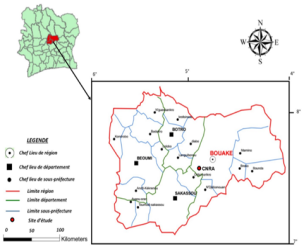
The study was conducted at the Phytopathology Laboratory of the Root and Tuber Plant Program (RTPP) at the Research Station for Food Crops (SRCV) of the National Center for Agronomic Research (CNRA) in Bouaké. The laboratory is situated between the latitudes of 7°69' North and 5°03' West, at an altitude of 376 metres above sea level . The station is bordered by the towns of Katiola and Dabakala to the north, Didiévi and Tiébissou to the south, M'bahiakro to the east and Béoumi, Sakassou and Botro to the west (Figure 1). The soils in the Gbêkê region are ferralitic and gravelly with a moderately saturated, sandy-clay texture . Bouaké lies in the transition zone between the southern forest zone and the northern savannah . The climate is tropical and humid, with four distinct seasons: a long dry season from November to February, a long rainy season from March to June, a short dry season from July to August, and a short rainy season from September to October .
Figure 1. Map of the Gbêkê Region Showing the Study Area
2.2. Fungal Material
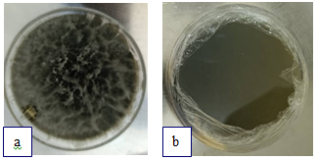
The fungal material consisted of isolates of the genus Rhizopus, a pathogen responsible for cassava root rot. Due to their virulence and aggressiveness, fungal isolates of the genus Rhizopus sp. were used in vitro testing (Figure 2).
(a) Front view; (b) Rear view.

Download: Download full-size image

Figure 2. Fungal Material.
2.3. Plant Material
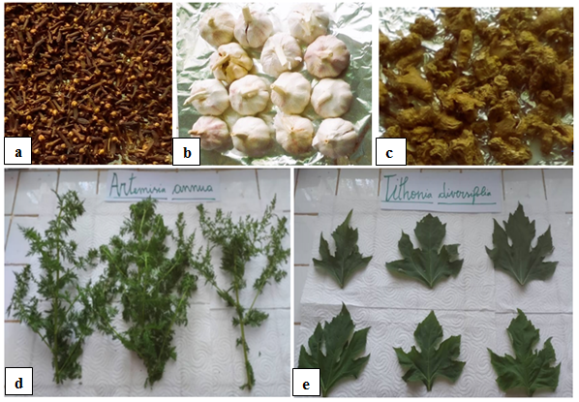
The plant material used consisted of pods of Allium sativum L., rhizomes of Zingiber officinale, flower buds of Syzygium aromaticum L., the aerial parts (stem and leaves) of Artemisia annua L., and leaves of Tithonia diversifolia (Table 1 and Figure 3). These components were used to prepare aqueous extracts.
Table 1. Plant Material Collected.

Common name

Botanical name

Collected part

Clove

Syzygium aromaticum

Flower buds

Ginger

Zingiber officinale

Rhizomes

Wormwood

Artemisia annua

Stem and leaves

Mexican sunflower

Tithonia diversifolia

Leaves

Ail

Allium sativum

pods

Figure 3. Plant Material Used for Preparing Aqueous Extracts.
a. Clove (Syzygium aromaticum);
b. Garlic (Allium sativum);
c. Ginger (Zingiber officinale);
d: Wormwood (Artemisia annua);
e: Mexican sunflower (Tithonia diversifolia).
2.4. Preparing Culture Media and Aqueous Plant Extracts
2.4.1. Preparing the Culture Medium and Purifying the Fungal Isolates
The PDA medium was used to isolate the pathogenic fungi responsible for cassava root rot. To prepare one litre of PDA medium, add 20 g of potato puree or flakes, 20 g of glucose and 20 g of agar to one litre of sterile distilled water. The solution was homogenized using a magnetic stirrer, after which it was sterilized in an autoclave at 121°C for 30 minutes at 1 bar pressure. Once cooled, the culture medium was distributed into 9 cm diameter Petri dishes under a laminar flow hood in the presence of a supercooled flame. Petri dishes containing PDA medium were used to purify fungal isolates. This process involved repeatedly inoculating the Rhizopus sp. fungus onto a new sterile culture medium under aseptic conditions in a laminar flow hood with a supercooled flame .
2.4.2. Preparing Aqueous Plant Extracts
Maceration technique
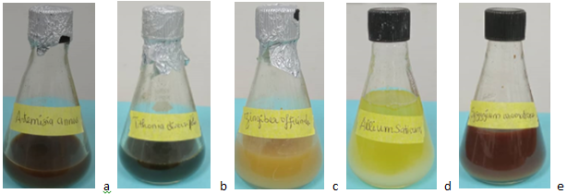
The maceration technique was employed for the leaves of Tithonia diversifolia and the aerial parts of Artemisia annua. The leaves and stems of these plants were dried at a laboratory temperature of 25 ± 2°C for 28 days. After drying, they were ground in a blender to produce fine powder. Then, one litre of sterile distilled water was added to 300 g of the powder from each plant, and the mixture was homogenized using a magnetic stirrer for 30 minutes. The powder and water mixtures were stored in bottles away from light for 48 hours. The solutions were then filtered through a fine muslin cloth to remove plant debris . The resulting filtrates constituted the stock solutions (Figure 4).
Grinding technique
This grinding technique was applied to Allium sativum pods, Zingiber officinale rhizomes, and Syzygium aromaticum dried flower buds. This involved grinding the pods, rhizomes and flower buds in a blender with sterile distilled water. For every 150 g constituent used, 50 ml of sterile distilled water was added while blending. After mixing, the resulting solutions were pressed using a fine muslin cloth (Figure 3). These solutions were diluted prior to application.
Amendment of the PDA culture medium using aqueous plant extracts
For the in vitro tests, a stock solution of 300 g/l was diluted to produce three daughter solutions containing 30%, 60% and 90% of the original solution .
Medium 1: 50 ml of PDA medium without an aqueous extract (control).
Medium 2: 45 ml of PDA medium + 5 ml of aqueous extract, giving a final concentration of 30 g/L.
Medium 3: 40 ml of PDA medium + 10 ml of aqueous extract to obtain a medium at 60 g/L.
Medium 4: 35 ml of PDA medium + 15 ml of aqueous extract to obtain a medium at 90 g/L.
The final solutions were equally distributed (10 ml each) into five Petri dishes .
a: Artemisia annua; b: Tithonia diversifolia; c: Zingiber officinale; d: Allium sativum; e: Syzygium aromaticum.

Download: Download full-size image

Figure 4. Stock Solution of Aqueous Plant Extracts.
Contact with fungal inoculum
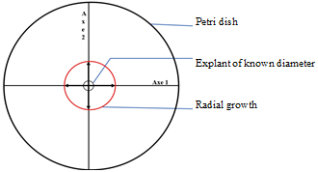
The fungal inoculum was placed in pre-prepared Petri dishes. These dishes contained a mixture of plant extracts and PDA medium, except for the control dish. To better evaluate the biological efficacy of the extracts, two diagonals were drawn (Figure 5) on the back of the Petri dishes . Using a sterile cookie cutter, a 7 mm fungal inoculum was taken and placed at the intersection of the diagonals . This inoculum was taken from a 7-day-old fungal culture. The amended dishes were stored in transparent trays in the laboratory. Data were collected every 24 hours to measure mycelial growth according to extract concentration. Data collection ceased when the controls filled the Petri dishes . For each aqueous solution, the control concentrations (C1 at 30 g/L, C2 at 60 g/L and C3 at 90 g/L) were repeated three times, with five boxes for each concentration. Thus, sixty Petri dishes were used for each aqueous solution and three hundred for the five solutions in total.
Figure 5. Diagram Showing How the Device Measures the Radial Growth of Fungal Colonies Using Two Perpendicular Axes Underneath the Petri dish.
2.5. Evaluation of the Biological Efficacy of Aqueous Extracts on the Macroscopic Characteristics of Rhizopus sp
Description of the macroscopic characteristics of Rhizopus sp., on the medium amended with aqueous extract: observations began on the first day of the experiment and continued until the last day. These characteristics included the appearance and color of the mycelium colonies, which were categorized according to the treatments (aqueous extracts and concentrations). To improve the description, these characteristics were compared with the control.
2.6. Evaluation of the Biological Efficacy of Aqueous Extracts on the Growth Parameters of Rhizopus sp
The growth parameters were the average diameter, growth rate, and mycelium growth inhibition. The average mycelial growth diameter was calculated using the formula developed by Boungab et al., in 2014 .
Dm= D1+D2: 2- DE
D1 and D2 are the two perpendicular diameters of mycelium growth. DE is the diameter of the explant and Dm is the average mycelium growth diameter.
The mycelium Growth Speed (GS) was obtained using the formula developed by Alem and Amrouche in 2016 .
GS= D1/T1 +D2/T2+D3/T3 +.+ Dn-Dn-1/Tn
D: Diameter of the growth zone each day (mm); T: Incubation time (days); GS: Growth speed.
Percentage inhibition was calculated using the sensitivity formula developed by Kumar et al., in 2007 .
(%)= Dt-Dx/Dtx 100
I (%): percentage inhibition of mycelium growth. Dt (mm): average diameter in the control box (without extract). Dx (mm): average diameter in the test box (with extract).
The level of resistance or sensitivity of the fungus Rhizopus sp. to aqueous extracts was assessed using the rating scale developed by Kumar et al., in 2007 . This scale is summarized into five levels:
Level 1 corresponds to an inhibition rate greater than 90% (I > 90%), indicating the aqueous extract is highly effective.
Level 2 corresponds to an inhibition percentage between 75 and 90% (75 < I < 90%), indicating good efficacy.
Level 3 corresponds to an inhibition percentage between 60 and 75% (60 < I < 75%), indicating average efficacy.
Level 4 corresponds to an inhibition percentage between 40 and 60% (40 < I < 60%), indicating low efficacy.
Level 5 corresponds to an inhibition percentage below 40% (I < 40%), indicating very low efficacy.
2.7. Evaluation of the Biological Efficacy of Aqueous Extracts on the Sporulation of Rhizopus sp
The biological efficacy of the extracts on Rhizopus sporulation was evaluated on the seventh day of the experiment. The 7-day-old fungal inocula were collected using a sterile 7 mm diameter cookie cutter and placed in pill dispensers containing 10 ml of sterile distilled water under a laminar flow hood and in the presence of a flame. Four fungal discs were collected per treatment. The pill bottles were placed on a vortex at 2,800 rpm for five minutes to thoroughly detach the spores (conidia). The resulting spore suspension was filtered using Wattman paper to remove mycelial fragments . After filtration, the number of spores was counted in 10 µl of spore solution using a Malassez cell according to the diagonal method. After counting, the number of spores was estimated in millilitres (ml). The formula developed by Kumar et al., in 2007 was then used to determine the inhibitory activity and biological efficacy of the aqueous extracts and concentrations. The formula is as follows:
SIR (%)= NSC-NST/NSCx 100
SIR (%): Sporulation Inhibition Rate; NSC: Number of Spores in the Control colony; NST: Number of Spores in the Test colony.
2.8. Statistical Analysis
The data collected from the tests were entered into a computer using Excel 2016 software and analysed using Statistica version 7.1. A one-way analysis of variance (ANOVA 1) model with a classification criterion was used to compare the effect of the aqueous plant extracts on each other, as well as the effect of each concentration on the growth parameters and sporulation of Rhizopus sp. A significant difference was observed between the aqueous plant extracts at a probability of less than 0.05 (P < 0.05). Tukey's HSD test was therefore used to identify homogeneous groups at a significance level of 5%. These analyses enabled the average diameters of Rhizopus sp. mycelium growth and inhibition rates, as well as the efficacy level of the plant extracts, to be grouped into two or three homogeneous groups according to the concentrations of the aqueous extracts.
3. Results
3.1. Effect of Aqueous Extracts on the Macroscopic Characteristics of Rhizopus sp
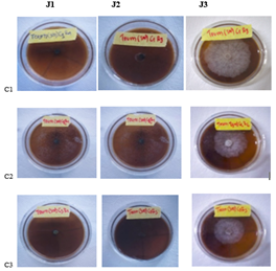
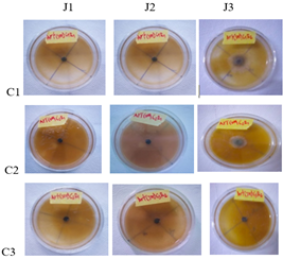
The appearance of the mycelium of Rhizopus sp. on PDA medium amended with aqueous extracts varied according to the concentration of the extract used. Mycelium was observed for all concentrations of Zingiber officinale and Tithonia diversifolia extracts. They were whitish in color with a cottony appearance throughout the experiment. These observations were made for all concentrations of T. diversifolia (Figure 6). The Zingiber officinale colonies remained unchanged (Whitish) throughout the three tests with concentration C3. This contrasted with concentrations C1 and C2, which caused the colonies to darken from the second day of the experiment (Figure 7). Mycelial colonies of Artemisia annua extracts were observed at concentrations of C1 (30 g/l) and C2 (60 g/l). These colonies were white on the third day of the experiment (Figure 8).
Figure 6. Appearance and Coloration of Rhizopus sp. Mycelium on a Medium Amended with Tithonia diversifolia.
Figure 8. Appearance and Coloration of Rhizopus sp., Mycelium on a Medium Amended with Artemisia Annua.
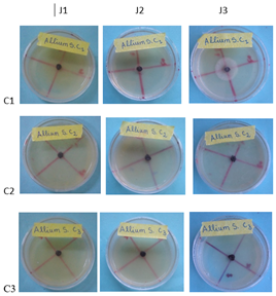
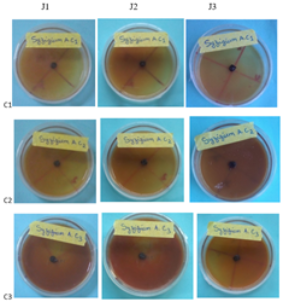
Except for the C1 concentration of Allium sativum, the mycelium colonies of the genus Rhizopus sp., were unable to germinate (Figure 9). The germinated colonies exhibited a consistent macroscopic appearance throughout the test. Regardless of the concentration, Syzygium aromaticum extracts caused incompatibility during the interaction between the extract and the fungal inoculum (Figure 10). The control boxes exhibited a whitish coloration with a cottony appearance at the onset of growth, subsequently turning greyish upon maturity. These boxes exhibited characteristics similar to concentrations C1 and C2 of Zingiber officinale extract, which resulted in the colonies turning black from the second day of the test onwards.
Figure 9. Appearance and Coloration of Rhizopus sp. Mycelium on a Medium Amended with Allium Sativum.
Figure 10. Appearance and Coloration of Rhizopus sp. Mycelial Colonies on a Medium Amended with Syzygium Aromaticum.
3.2. Effect of Aqueous Plant Extracts on the Growth of Rhizopus sp. Mycelium
Growth of Rhizopus sp. mycelium as a function of aqueous extract concentrations
The average mycelium growth diameter also varied as a function of aqueous extract concentrations (Table 2). The smallest diameters were obtained at concentrations C1, C2 and C3 of S. aromaticum extracts, at concentrations C2 and C3 of A. sativum extracts, and at concentration C3 of A. annua extracts. The largest average diameters of Rhizopus sp. mycelium growth were, however, recorded for concentrations C1 and C2 of T. diversifolia, followed by concentration C1 of Z. officinale, and the smallest diameters were obtained in the media control without aqueous extracts.
Table 2. Average Diameter of Rhizopus sp. Mycelium Growth as a Function of Aqueous Extract Concentration.

Aqueous extracts

Concentration

C1

C2

C3

S. aromaticum

0,0000 ± 0,0000 a

0,0000 ± 0,0000 a

0,0000 ± 0,0000 a

A. sativum

0,6600 ± 0,0300 b

0,0000 ± 0,0000 a

0,0000 ± 0,0000 a

A. annua

1,0500 ± 0,0600 c

0,5500 ± 0,0300 b

0,0000 ± 0,0000 a

Z. officinale

2,7400 ± 0,1400 c

1,0400 ± 0,0500 b

0,2100 ± 0,1000 a

T. diversifolia

4,0600 ± 0,2100 c

3,3300 ± 0,1700 b

2,3000 ± 0,1200 a

Control

9,0000 ± 0,4500 a

9,0000 ± 0,4500 a

9,0000 ± 0,4500 a

Average

2,9200

2,3200

1,9200

Probability (P)

< 0,0001

< 0,0001

< 0,0001

Values followed by the same letter on the same line are statistically equal at the α = 0.0001 threshold.
Average growth rate of Rhizopus sp. mycelium as a function of aqueous extract concentrations
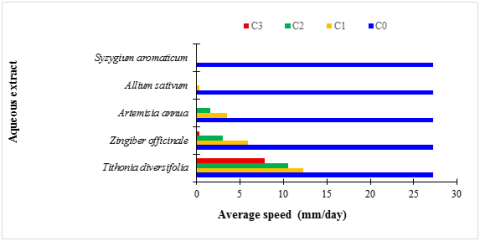
The average growth rate of Rhizopus sp. varied depending on the concentration of the aqueous extract. Regardless of the extract used, the rate of mycelium growth decreased as the concentration increased. Compared to the control (C0), no growth was observed with the Syzygium aromaticum-based aqueous extract. The Allium sativum extract caused a decrease in the mycelium growth rate from 27.28 mm/day to 0.33 mm/day at concentration C1. No mycelium was observed at concentrations C2 and C3. By contrast, the Tithonia diversifolia aqueous extract at C3 concentration induced a decrease in the growth rate from 27.28 to 7.88 mm/day (Figure 11).
Figure 11. Average Speed of Mycelial Growth Depends on the Aqueous Extracts. Rate of Inhibition of Rhizopus sp. Mycelium Growth and Level of Plant Extract Efficacy Based on Aqueous Extract Concentrations.
The rate at which Rhizopus sp. mycelium growth was inhibited varied according to the concentration of the aqueous extract (Table 3). The highest inhibition rates were obtained with concentrations C1, C2 and C3 of S. aromaticum, C2 and C3 of A. sativum, and C3 of A. annua. The lowest inhibition rates were recorded with concentrations C1 and C2 of T. diversifolia and concentration C1 of Z. officinale aqueous extracts. According to Kumar et al. (2007), concentrations C1, C2 and C3 of S. aromaticum, C2 and C3 of A. sativum, and C3 of A. annua were very effective, while concentrations C1 and C2 of T. diversifolia were very ineffective.
Table 3. Inhibition Rate of Mycelium Growth (%) and Level of Efficacy of Plant Extracts According to the Concentrations of Aqueous Extracts.

Aqueous extracts.

Concentrations

Level of efficacy

C1

C2

C3

C1

C2

C3

S. aromaticum

100,0 ± 0,00 a

100,00 ± 0,00 a

100,00 ± 0,00 a

VE

VE

VE

A. sativum

89,12±2,03b

100,00 ± 0,00 a

100,00 ± 0,00 a

EE

VE

VE

A. annua

83,03±2,55 c

90,86± 2,55 b

100,00 ± 0,00 a

EE

VE

VE

Z. officinale

54,52±6,26 c

82,70±6,26 b

96,50±6,26 a

ME

EE

VE

T. diversifolia

32,85±4,28 c

45,01±4,28 b

62,00± 4,28 a

VLE

LE

ME

Control

0,00 ± 0,00 a

0,00 ± 0,00 a

0,00 ± 0,00 a

VLE

VLE

VLE

Average

59,92

69,76

76,42

Probability (P)

0,05

0,05

0,05

Inhibitions (%) classified according to the following scale: 1) VE (> 90% inhibition); 2) EE (> 75-90% inhibition); 3) ME (> 60-75% inhibition); 4) LE (> 40-60% inhibition) and 5) VLE (< 40%). VE = Very Effective, EE = Effective, ME = Moderately Effective, LE = Less Effective, VLE = Very Less Effective.
Values followed by the same letter on the same line are statistically equal at the α = 0.05 threshold.
3.3. Effect of the Aqueous Extracts on the Sporulation of Rhizopus sp. and Their Respective Levels of Effectiveness
The rate of spore germination inhibition varied according to concentration (Table 4). The efficacy of the aqueous extracts on the sporulation of Rhizopus sp. was interpreted according to the scale of Kumar et al., in 2007 . Concentrations C1, C2 and C3 of Syzygium aromaticum, C2 and C3 of Allium sativum and C3 of Artemisia annua induced an inhibition rate of 100%. The C3 concentration of Zingiber officinale induced an inhibition rate of 80.42%, which was lower than that observed in previous interactions. The lowest level of efficacy was observed with the C1 concentration of Tithonia diversifolia.
Table 4. The Inhibition Rate of Spore Germination and the Level of Efficacy of Plant Extracts.

Aqueous extracts

Concentrations

Level of efficacy

C1

C2

C3

C1

C2

C3

S. aromaticum

100,00 ± 5,00 a

100,00 ± 5,00 a

100,00 ± 5,00 a

VE

VE

VE

A. sativum

42,70 ± 2,13 c

100,00 ± 5,00 a

100,00 ± 5,00 a

LE

VE

VE

A. annua

68,3 ± 3,41c

69, 72 ± 3,48 b

100,00 ± 5,00 a

ME

ME

VE

Z. officinale

56,35 ± 2,81 c

67,99 ± 3,39 b

80,42 ± 4,04 a

LE

ME

EE

T. diversifolia

23,62 ± 1,18 c

47,52 ± 2,37 a

49,84 ± 4,28 a

VLE

FE

LE

Control

00,00 ± 0,00 a

00,00 ± 0,00 a

00,00 ± 0,00 a

VLE

VLE

VLE

Average

48,50

64,20

71,71

Probability (P)

0,05

0,05

0,05

Inhibitions (%) classified according to the following scale: 1) VE (> 90% inhibition); 2) EE (> 75-90% inhibition); 3) ME (> 60-75% inhibition); 4) LE (> 40-60% inhibition) and 5) VLE (< 40%). VE = Very Effective, EE = Effective, ME = Moderately Effective, LE = Less Effective, VLE = Very Less Effective.
Values followed by the same letter on the same line are statistically equal at the α = 0.05 threshold.
4. Discussion
The results of in vitro tests on aqueous extracts at different concentrations of S. aromaticum, A. sativum, A. annua, Z. officinale and T. diversifolia showed different biological activity against the fungus Rhizopus sp. These aqueous extracts induced effects on the appearance and colouration of colonies as well as on mycelial growth and spore germination of Rhizopus sp. The nature of their activity showed that these aqueous extracts may have antifungal properties . These properties may be due to secondary metabolites such as saponosides, flavonoids, tannins, quinones, alkaloids and polyterpenes produced by these plants . The variation in biological activity could be linked to the different chemical compounds contained within these aqueous extracts, as well as their concentrations within the culture media.
The efficacy of the extracts in influencing the appearance and color of Rhizopus sp. colonies varied according to the extract's concentration and type. The three concentrations of S. aromaticum and the two concentrations of A. sativum (C2 and C3) did not produce any colonies. Compared to the control, the three Z. officinale concentrations and the C1 and C2 A. annua concentrations had no effect on the appearance or color of Rhizopus sp. colonies. Colonies were recorded, initially appearing whitish; over time, the growth front remained whitish, and the center turned black. These observations can be explained by the ineffectiveness of Z. officinale and A. annua extracts in altering the color of Rhizopus sp. colonies. Similar results were obtained by Koua (2022), who showed that Z. officinale-based extracts have no effect on the coloration of Aspergillus sp. mycelium. . For the three T. diversifolia extract concentrations and the A. sativum C1 concentration, Rhizopus colonies were recorded as being present in low numbers and remained white until the third day. These results could be due to these extracts' ability to modify the biological behaviour of Rhizopus sp., which corroborates Koua's 2022 work on the biological modification of fungi according to the biological activity of aqueous extracts .
The biological efficacy of the aqueous extracts on the mycelium growth of Rhizopus sp. varied depending on the type and concentration of the extract. Aqueous extracts of S. aromaticum, A. sativum and A. annua have demonstrated excellent efficacy and may contain secondary metabolites that exhibit antifungal properties. Similar results were obtained by Guyenot in 2003 for S. aromaticum extracts. They demonstrated the presence of eugenol in these extracts .
It is the main secondary metabolite of S. aromaticum and can dissolve in aqueous media, causing the destruction of microbial cell walls. This explains its effectiveness in inhibiting the growth of Rhizopus sp. Other studies conducted on A. sativum have shown the presence of allicin in these extracts . Allicin is the primary secondary metabolite found in garlic cloves. It may act on mycelial hyphae, causing them to lose rigidity and cell wall integrity. This could result in mycelia collapsing and dying . Furthermore, studies conducted by Bhattarai in 2016 on A. annua revealed that the presence of artemisinin in these extracts was responsible for their antifungal activity . This could explain their antiparasitic and antifungal activities, including against Plasmodium falciparum. Studies on Z. officinale have shown that ginger juice has antifungal properties thanks to gingerols, and ginger extracts have been found to moderately inhibit the mycelial growth of Rhizopus sp. Gingerols are thought to be secondary metabolites with the ability to inhibit fungal hyphae and slow their growth .
The extract of T. diversifolia showed low efficacy, which could be due to the fungus's resistance to the active ingredients or the low concentration of bioactive compounds in the medium. Studies by Tona in 2000 showed that T. diversifolia leaves contain sesquiterpenes, saponins, and alkaloids . In summary, the dose-response principle indicated by Fofana in 2020 is observed by increasing the doses of the extracts .
The biological efficacy of aqueous extracts on the mycelial growth and spore germination of Rhizopus sp. varied depending on the extracts and their concentrations. Indeed, these extracts contain active ingredients that have an antifungal effect on the mycelium of Rhizopus. Our results are consistent with those of Camara in 2007 and Tuo in 2022, who demonstrated in their respective studies that plant extracts exhibit insecticidal, fungicidal and bactericidal properties . Their effectiveness in promoting spore germination could also be explained by the spores being completely immersed in the medium. The active ingredients in the aqueous extracts appear to act on multiple sites on the spores. These results demonstrate that media based on these extracts are not conducive to the germination of Rhizopus spores. This corroborates the 2018 study by Khebbeb, which showed that inhibiting spore formation and germination is an effective indicator of a product's fungicidal properties . The ability of allicin and artemisinin to prevent sporulation and hyphal growth could explain the inhibition of A. sativum and A. annua germination .
The aqueous extract of Z. officinale was found to partially inhibit sporulation. The dose-response principle described by Fofana in 2020 could explain why higher doses of Z. officinale lead to greater inhibition of spore germination . However, some studies have shown that Tithonia diversifolia leaves contain antifungal compounds . Nevertheless, the low efficacy of T. diversifolia on Rhizopus sp. spore germination could also be explained by the low concentration of bioactive compounds.
5. Conclusions
This study evaluated in vitro efficacy of the following aqueous plant extracts against the fungus Rhizopus sp., which causes soft rot in cassava tubers: Syzygium aromaticum, Allium sativum, Artemisia annua, Zingiber officinale and Tithonia diversifolia. The biological activity of the aqueous extracts varied depending on the extract and its concentration in the PDA culture medium. Extracts of S. aromaticum, A. sativum, A. annua and Z. officinale exhibited excellent efficacy in inhibiting the mycelial growth of Rhizopus sp., with complete inhibition occurring at concentration C3. In contrast, the T. diversifolia extract exhibited weak efficacy at concentrations C1 and C2, becoming moderately effective at concentration C3. Regarding sporulation, the extracts of Syzygium aromaticum, Allium sativum and Artemisia were highly effective against the isolate. The Tithonia diversifolia extract showed low efficacy. All three S. aromaticum concentrations had a fungicidal effect. Concentrations C2 and C3 of A. sativum, as well as C3 of A. annua, had a fungistatic effect.
These results are based solely on an in vitro study involving a single genus of fungus. Given the results obtained, it would be advisable to test the in vivo effect of these plant extracts and establish whether they are effective against other pathogenic fungi responsible for cassava root rot.
Abbreviations

PDA

Potatoes Dextrose Agar

RTPP

Root and Tuber Plant Program

SRCV

Research Station for Food Crops

CNRA

National Center for Agronomic Research

ANOVA

A One-Way Analysis of Variance

Conflicts of Interest
The authors declare no conflicts of interest.
References
[1] Essis, B. S., Hala, K. A., Coulibaly, K., Dibi, K. B. E. and N’Zue, B. Evaluation of the Sensitivity of Thirteen (13) Promising Cassava Varieties to Diseases (Viruses-Bacteria) and Pests (Mealybugs-Mites) in Central Côte d’Ivoire. American Journal of BioScience. 2024, 12(6), 169-180.
[2] Oluwasanya D, Esan O, Hyde PT, Kulakow P and Setter TL. Flower Development in Cassava Is Feminized by Cytokinin, While Proliferation Is Stimulated by Anti-Ethylene and Pruning: Transcriptome Responses. Front. Plant Sci. 2021, 12: 666266, 1-17.
[3] Faostat. Food and Agriculture Organization, United Nations. 2024.
[4] Salvador, EM, Steenkamp, V and McCrindle CME. Production, consumption and nutritional value of cassava (Manihot esculenta, Crantz) in Mozambique: an overview', Journal of Agricultural Biotechnology and Sustainable Development. Biotechnology and Sustainable Development. 2014, 6(3): 29-38.
[5] Food and Agriculture Organization, United Nations. 2022.
[6] N'zue B., Okoma M. P., Kouakou A. M., Dibi K. E. B., Zohouri G. P., Essis B. S. and Dansi A. A.. Morphological Characterization of Cassava (Manihot esculenta Crantz) Accessions Collected in the Centre-west, South-west and West of Côte d'Ivoire. Greener Journal of Agricultural Sciences. 2014, 4(6): 220-231.
[7] Food and Agriculture Organization, United Nations. 2020.
[8] Kalyebi A, Macfadyen S, Parry H, Tay WT, De Barro P. and Colvin J. African cassava whitefly, Bemisia tabaci, cassava colonization preferences and control implications. PLoS ONE. 2018, 13(10): e0204862.
[9] Alicai T., Szyniszewska A. M., Omongo C. A., Abidrabo P., Okao-Okuja G. and Baguma Y. Expansion of the Cassava Brown Streak pandemic in Uganda revealed by annual field Survey data for 2004 to 2017. Sciences Data, 18; 2019, 6(1): 327-335.
[10] Yarou B. B., Francisco A. R., De Troij A., Toure F., Azagba J., Traore A., Dagno K. & Aboubakar S. D. Protecting my crops from pests: Technical and Information Document (DT&I). CIRAD/WorldVeg. Legal deposit: No. 15333, 4th quarter, 9 October 2023, National Library of Benin. 33 pages.
[11] Thiemele D. E. F., Kone D., Kone M. T. & Diarrassouba N. Effect of different substrates on the growth and development of plantain banana (Musa sp.) plants in marginal production areas in northern Côte d'Ivoire (Korhogo). Afrique science. 2023 23(4), 72-85.
[12] Bedidjo R., Mamba G. & Monde G. Identification and morphological characterisation of the fungi responsible for cassava root necrosis disease in the province of Tshopo, Democratic Republic of Congo. Afrique science. 2024, 24(4) 132- 143. ISSN 1813-548X.
[13] Oladoye C. O., Olaoye O. A. & Connerton I. F. Isolation and Identification of bacteria associated with Spoilage of sweet potatoes during postharvest storage. International Journal of Agricultural and Food Science. 2013, 3(1): 10-15.
[14] Amadioha A. C. Reducing Food losses through Sustainable methods of plant disease management: an imperative for actualization of food security in Nigeria. In 13th inaugural lecture MOUAU, June. 2012.
[15] Fianko J. R., Donkor A., Lowor S. T., Yeboah P. O., Glover E. T., Adom T. and Faanu A. Health Risk Associated with Pesticide Contamination of Fish from the Densu River Basin in Ghana. Journal of Environmental Protection. 2011, 2(2): 115-123.
[16] Doga, D., Ouattara, K. E. Orsot, B. A. M. B., Zirihi, G. N., and Zeze, A. In vitro evaluation of the fungicidal activity of aqueous Crotalaria retusa L. (Fabaceae) leaf extract on Fusarium sp. International Journal of Biological and Chemical Sciences. 2023, 16(5): 1860–1867.
[17] Iftikhar, T., Babar, L. K., Zahoor, S. and Khan, N. G. Best irrigation management practices in cotton. Pak. J. Bot. 2010, 42(5): 3023-3028.
[18] Uddin, N, Rahman, A., Ahmed, N. U., Rana, S., Akter, R. and Chowdhury, A. M. MA. Antioxidant, cytotoxic and antimicrobial properties of Eclipta alba ethanol extract. International Journal of Biological & Medical Research. 2010, 1(4): 341-346.
[19] Katooli, N., Maghsodlo, R. and Razavi, E. S. Evaluation of Eucalptus essential oil against some plant pathogenic fungi. Journal of Plant Breeding and Crop Science. 2011, 3(2): 41-43.
[20] N’zi J. C., Kouame C., N’guetta A. S. P., Fondio L., Djidji A. H. and Sangare A. Changes in Bemisia tabaci Genn populations according to tomato (Solanum lycopersicum L.) variety in Central Côte d'Ivoire. Sciences & Nature. 2010, 7(1): 31-40.
[21] Ettien, D. J. B. Intensification of yam production (Dioscorea spp) through mineral fertilization and the identification of new varieties in forest and savannah areas of Côte d'Ivoire. Single doctoral thesis in Earth sciences, specializing in Agro-pedology. University of Cocody, 2004, Abidjan, 187.
[22] Traore K., Sorho F., Dramane D. D. and Sylla M. Alternative weed hosts for viruses in Solanaceae crops in Côte d'Ivoire. Agronomie Africaine, 2013, 25(3): 231?237.
[23] Jones D. L., Rousk J., Edwands-Jone G., Deluca T. H. and Murphy D. V. Biochar-madiated changes in Soil quality and plant growth in a three-year field trial. Soil Biology and Biochemistry. 2012, 45: 113-124.
[24] Brou Y. T., Akindes F. and Bigot S. Climate variability in Côte d'Ivoire: between social perceptions and agricultural responses. Cahiers Agricultures. 2005, 14(6): 533–540(1).
[25] Mouria, B., Ouazzani-Touhami, A. and Douira, A. Effect of various strains of Trichoderma on the growth of tomato crops in greenhouses and their ability to colonise roots and substrate. Phytoprotection. 2007, 88(3): 103–110.
[26] Ackah J. A., Kra A., Koffi M., Zirihi N. and Guede Guina F. Evaluation and testing of optimisations of the anti-candidal activity of Terminaria catapa Linn (TEKAM3), an extract of Combretaceae from the Ivorian pharmacopoeia. Bulletin of the Royal Society of Sciences of Liège. 2008, 77: 120-136.
[27] Doumbouya M, Brou K. G., Essis B. S., Diby K. E. B., Oyourou G. M. and Kone D. Evaluation of the antifungal activity of essential oils from Ocimum basilicum, Cymbopogon citratus, Eucalyptus camaldulensi. International Journal of Development Research, 2021, 11(11): 51506-51511.
[28] Alem K. & Amrouche D. Study of the antifungal activity of the aqueous extract of Citrus paradisi (Rutaceae) grapefruit seeds against Fusarium tricinctum in wheat using in vitro and in vivo methods. Master's thesis, University M'Hamed Bougera of Boumerdes. 2016, 72.
[29] Kamara A. Study of the diversity of fungi responsible for post-harvest rot in yams (Dioscorea spp.) in the context of climate change and approaches to biological control methods. Single doctoral thesis at Felix HOUPHOUËT-BOIGNY University (Côte d'Ivoire), Climate Change, Biodiversity and Sustainable Agriculture. 2025, 198 p.
[30] Lorougnon F., Heroin P., Therizol M., Kanga J. M., Djeha D., Toboue P. & Aka B. D. Clinical efficacy of naftifine in the treatment of dermatomycoses. Médecine d’Afrique Noire. 1991, 38: 709-714.
[31] Riguet S. & Mezroua Z. Use of certain plant extracts (Colocynthis vulgaris and Rosmarinus officinalis) in combating inflorescence rot in date palms in the Biskra region. Master's thesis, University Mohamed Kheider of Biskra. 2019, 70p.
[32] Boungab K., Tadjeddine A. & Belabid L. Effectiveness of cinnamon essential oil (Cinnamomum cassia) on phytopathogenic fungi. PhytoChem & BioSub Journal. 2014, 8(4): 2170-1768.
[33] Kumar O., Lakshmana R. P. V., Pradhan S, Jayaraj R, Bhaskar A. S., Nashikkar A. B. and Vijayaraghavan R. Dose dependent effect of ricin on DNA damage and antioxidant enzymes in mice. Cell and Molecular Biology. 2007, 53(5): 92-102.
[34] Bazie, J. B. Access to water: Africa between abundance and scarcity. Apres-Demain, 2014/3, 31-32
[35] Mezouar D., Lahfa F. B., Abdelouahid D. E., Adida H., Rahmoun N. M. and Boucherit-Otmani Z. Antimicrobial activity of Berberis vulgaris root bark extracts. Phytothérapie. 2014, 12: 380–385.
[36] N’Guessan K., Kadja B., Zirihi G. N., Traore D. and Ake-Assi L. Phytochemical screening of several Ivorian medicinal plants. Science Naturelle. 2009, 6: 1- 15.
[37] Dabé, D., Noël, Z. G. and Adolphe, Z. Antifungal properties of medicinal legumes from Côte d'Ivoire: the case of Crotalaria retusa L. (Fabaceae) on the in vitro growth of Phytophthora sp and Fusarium solani, two phytopathogenic fungi. European Scientific Journal. 2017, 13(3): 371-384.
[38] Bolou G. E. K, Attioua B., N’Guessan A. C., Coulibaly A., N’Guessan J. D. and Djaman A. In vitro evaluation of the antibacterial activity of Terminalia glaucescens planch. extracts on Salmonella typhi and Salmonella typhimurium.’ Bulletin of the Royal Society of Sciences of Liège. 2011, 80: 772 – 790
[39] Koua K. F. Study of the in vitro antifungal activity of aqueous extracts of Zingiber officinale, Allium sativum and Syzygium aromaticum against Aspergillus sp., the agent responsible for corn rot (Zea mays L.) during storage. Master's thesis at NANGUI ABROGOUA University, Faculty of Natural Sciences in Plant and Environmental Protection. 2022, 45 p.
[40] Guyenot M. E., Ramos A. J., Seto L., Purroy P., Sanchis V. S. and Marin. Antifungal activity of volatile compounds generated by essential oils against fungi commonly causing deterioration of bakery Products. Journal of Applied Microbiology. 2003. 94: 893–899.
[41] Khebbeb L and Bouanaka H. Comparative in vitro study of the effect of synthetic antifungals and essential oils of Allium sativum and Zingiberis rhizoma on two species of medical interest: C. albicans and A. niger. Master's thesis University of Frères Mentouri Constantine 1. Faculty of Natural and Life Sciences. 2018. 94p.
[42] Sharma R. R., Dinesh S. and Rajbir S. Biological control of postharvest diseases of fruits and vegetables by microbial antagonists: A review. Biological control. 2009, 50(3): 205-221.
[43] Bhattarai B. and Jha S. K. Antifungal effects of some plant essential oils against Alternaria alternata (Fr.) Keissl and Aspergillus niger van Tiegh from grapes. Biological Forum An International Journal. 2016, 8(2): 259-263.
[44] Ousslah M., Caillet S., Saucier L. and Lacroix M. Antimicrobial effects of Selected plant essential oils on the growth of a pseudomonas putida strain isolated from meat-meat. Science. 2006, 73(2): 244-246.
[45] Tona L., Kambu K., Ngimbi N., Messia K., Penge O., Lusakibanga M., Cimanga K., De-Bruyre T., Apero S., Totte J., Pietres L., Vlietincia A. J. Anti-amoebic and spasmolytic activities of extracts from some antidiarrhoeal traditional preparations used in Kinshasha, Congo. Phytomedecine. 2000, 7: 31-38.
[46] Fofana B., Soro S., Kassy F., Silue N., Zouzou M., Kone D. Valorisation of plant-based biofungicides for eco-efficient management of brown rot of cocoa pods caused by Phytophthora palmivora. Journal of animal & plant sciences. 2020, 44(2): 7654-7676.
[47] Camara B., Kone D., Coffi K. C., Abo A. and Ake S. Antifungal activity of essential oils from Ocimum gratissimum L., Monodora myristica (Gaaertn) Dunal and two synthetic products (Impulse and Folicur) on mycelial growth and spore production in vitro of Deightoniella torulosa (Syd.) Ellis. Revue Ivoirienne des Sciences et Technologie. 2007, 9: 187-201.
[48] Tuo Q. Z., Zhang S. T., Lei P. Mechanisms of neuronal Cell death in ischemic stroke and their therapeutic implications. Medicinal Research Reviews. 2022, 42: 259-305.
[49] Guo J. J., Kuo C. M., Hong J. W., Chou R. L., Lee Y. H. and Chen T. I. The effects of garlic supplemented Streptococcus iniae and on growth in Cobia, Rachycentron canadum, Aquaculture. 2015, 435: 111?115.
Cite This Article
  • APA Style

    Essis, B. S., Yah, N. M., Hala, K. A., Yili, E., Koffi, A. M. J., et al. (2025). Antifungal Activity of Five Aqueous Extracts on Rhizopus sp., the Agent Responsible for Soft Rot of Cassava (Manihot esculenta Crantz) Tubers in Côte d'Ivoire. American Journal of Life Sciences, 13(6), 229-241. https://doi.org/10.11648/j.ajls.20251306.17

    Copy | Download

    ACS Style

    Essis, B. S.; Yah, N. M.; Hala, K. A.; Yili, E.; Koffi, A. M. J., et al. Antifungal Activity of Five Aqueous Extracts on Rhizopus sp., the Agent Responsible for Soft Rot of Cassava (Manihot esculenta Crantz) Tubers in Côte d'Ivoire. Am. J. Life Sci. 2025, 13(6), 229-241. doi: 10.11648/j.ajls.20251306.17

    Copy | Download

    AMA Style

    Essis BS, Yah NM, Hala KA, Yili E, Koffi AMJ, et al. Antifungal Activity of Five Aqueous Extracts on Rhizopus sp., the Agent Responsible for Soft Rot of Cassava (Manihot esculenta Crantz) Tubers in Côte d'Ivoire. Am J Life Sci. 2025;13(6):229-241. doi: 10.11648/j.ajls.20251306.17

    Copy | Download

  • @article{10.11648/j.ajls.20251306.17,
      author = {Brice Sidoine Essis and N’Guettia Marie Yah and Kinampinan Adelphe Hala and Elie Yili and Aya Marie Julienne Koffi and Adjo Christiane Koffi and Konan Evrard Brice Dibi},
      title = {Antifungal Activity of Five Aqueous Extracts on Rhizopus sp., the Agent Responsible for Soft Rot of Cassava (Manihot esculenta Crantz) Tubers in Côte d'Ivoire},
      journal = {American Journal of Life Sciences},
      volume = {13},
      number = {6},
      pages = {229-241},
      doi = {10.11648/j.ajls.20251306.17},
      url = {https://doi.org/10.11648/j.ajls.20251306.17},
      eprint = {https://article.sciencepublishinggroup.com/pdf/10.11648.j.ajls.20251306.17},
      abstract = {Cassava (Manihot esculenta Crantz) is the second most important food crop in Côte d'Ivoire after yams. However, its production is threatened by the fungus Rhizopus sp., which causes cassava tuber rot. The chemical pesticides used to control these microorganisms pose a threat to the environment, as well as to the health of those who use and consume them. To minimize the damage caused by these substances, a study was conducted to evaluate the biological efficacy of aqueous extracts of Syzygium aromaticum, Allium sativum, Artemisia annua, Zingiber officinale and Tithonia diversifolia against Rhizopus sp. The extracts were tested at concentrations of 30, 60 and 90 g/L for their effect on mycelial growth and spore germination. The direct contact method in PDA medium was employed, and the results revealed that all the aqueous extracts exhibited an antifungal effect on mycelial growth and spore germination. The highest inhibition rates of mycelial growth and spore germination were obtained at 90 g/L. Aqueous extracts of Syzygium aromaticum were the most effective, achieving a 100% inhibition rate, while those of Tithonia diversifolia had the lowest inhibition rates.},
     year = {2025}
    }
    

    Copy | Download

  • TY  - JOUR
    T1  - Antifungal Activity of Five Aqueous Extracts on Rhizopus sp., the Agent Responsible for Soft Rot of Cassava (Manihot esculenta Crantz) Tubers in Côte d'Ivoire
    AU  - Brice Sidoine Essis
    AU  - N’Guettia Marie Yah
    AU  - Kinampinan Adelphe Hala
    AU  - Elie Yili
    AU  - Aya Marie Julienne Koffi
    AU  - Adjo Christiane Koffi
    AU  - Konan Evrard Brice Dibi
    Y1  - 2025/12/31
    PY  - 2025
    N1  - https://doi.org/10.11648/j.ajls.20251306.17
    DO  - 10.11648/j.ajls.20251306.17
    T2  - American Journal of Life Sciences
    JF  - American Journal of Life Sciences
    JO  - American Journal of Life Sciences
    SP  - 229
    EP  - 241
    PB  - Science Publishing Group
    SN  - 2328-5737
    UR  - https://doi.org/10.11648/j.ajls.20251306.17
    AB  - Cassava (Manihot esculenta Crantz) is the second most important food crop in Côte d'Ivoire after yams. However, its production is threatened by the fungus Rhizopus sp., which causes cassava tuber rot. The chemical pesticides used to control these microorganisms pose a threat to the environment, as well as to the health of those who use and consume them. To minimize the damage caused by these substances, a study was conducted to evaluate the biological efficacy of aqueous extracts of Syzygium aromaticum, Allium sativum, Artemisia annua, Zingiber officinale and Tithonia diversifolia against Rhizopus sp. The extracts were tested at concentrations of 30, 60 and 90 g/L for their effect on mycelial growth and spore germination. The direct contact method in PDA medium was employed, and the results revealed that all the aqueous extracts exhibited an antifungal effect on mycelial growth and spore germination. The highest inhibition rates of mycelial growth and spore germination were obtained at 90 g/L. Aqueous extracts of Syzygium aromaticum were the most effective, achieving a 100% inhibition rate, while those of Tithonia diversifolia had the lowest inhibition rates.
    VL  - 13
    IS  - 6
    ER  - 

    Copy | Download

Author Information
  • Root and Tuber Plant Program (RTPP),National Center for Agronomic Research (CNRA), Bouake, Côte d’Ivoire
  • Bioresources-Agronomy Department, University Jean Lorougnon Guede, Daloa, Côte d’Ivoire

  • Root and Tuber Plant Program (RTPP),National Center for Agronomic Research (CNRA), Bouake, Côte d’Ivoire

  • Bioresources-Agronomy Department, University Jean Lorougnon Guede, Daloa, Côte d’Ivoire

  • Plant Biology Department, University Peleforo Gon Coulibaly, Korhogo, Côte d’Ivoire

  • Root and Tuber Plant Program (RTPP),National Center for Agronomic Research (CNRA), Bouake, Côte d’Ivoire

  • Root and Tuber Plant Program (RTPP),National Center for Agronomic Research (CNRA), Bouake, Côte d’Ivoire

  • Abstract
  • Keywords
  • Document Sections

    1. 1. Introduction
    2. 2. Materials and Methods
    3. 3. Results
    4. 4. Discussion
    5. 5. Conclusions
    Show Full Outline
  • Abbreviations
  • Conflicts of Interest
  • References
  • Cite This Article
  • Author Information